I’m a very fast typer. I’ve always been. In my early 20s, I had great pride in being able to take notes in a meeting as fast as people could talk. I typed so fast that my fingernails would rub the letters off of my keys…a source of pride in my earlier years!
But, unsurprisingly, most people have bigger ambitions than becoming fast typers. They just want to get their point across (quickly), and the keyboard has long been the only form factor between thoughts and communication. And this form factor is proving to come with significant friction — perhaps we just never called it as such, because we never had any real alternative.
We’re investing in Wispr Flow’s series B to scale a new form factor for information flow. And to scale a new form factor for consumer AI, which demonstrates to people everywhere that intelligence can be seamless, invisible, and a truly indispensable companion product to users.
Bar for Voice is High
Despite the categorical strides in AI, voice-to-text standards on Apple and other primary devices have been severely underwhelming.
For example, my six-year-old picks up the remote control at night and instead of typing in “Bluey” (which takes forever on the TV screen), he instinctively presses the button with the mic:
BLUEY. B-LUE—- Y. B-L-U-E-YYYY!!!!!!
While the more intuitive move, voice technology still can’t seem to figure out what he wants. He gets frustrated. And we’re back to pecking and typing, often with me taking over.
Even I am reduced to fighting with Siri every night. All I want is to ask the time, put on a timer, change the music, or send a text without comical errors. Why, after decades of technological innovation, has voice remained so bad?
It turns out that it’s an especially tough problem to solve. Dictation itself is challenging to get accurate, but also, humans just don’t speak that clearly or eloquently most of the time. We ramble, stumble, correct ourselves. Furthermore, if you still need to type anyway to clean up a message, then what’s the point of using voice in the first place?
Wispr Flow: Lightyears Better Than The Voice AI Before It
When I first started using WisprFlow, it was magical.
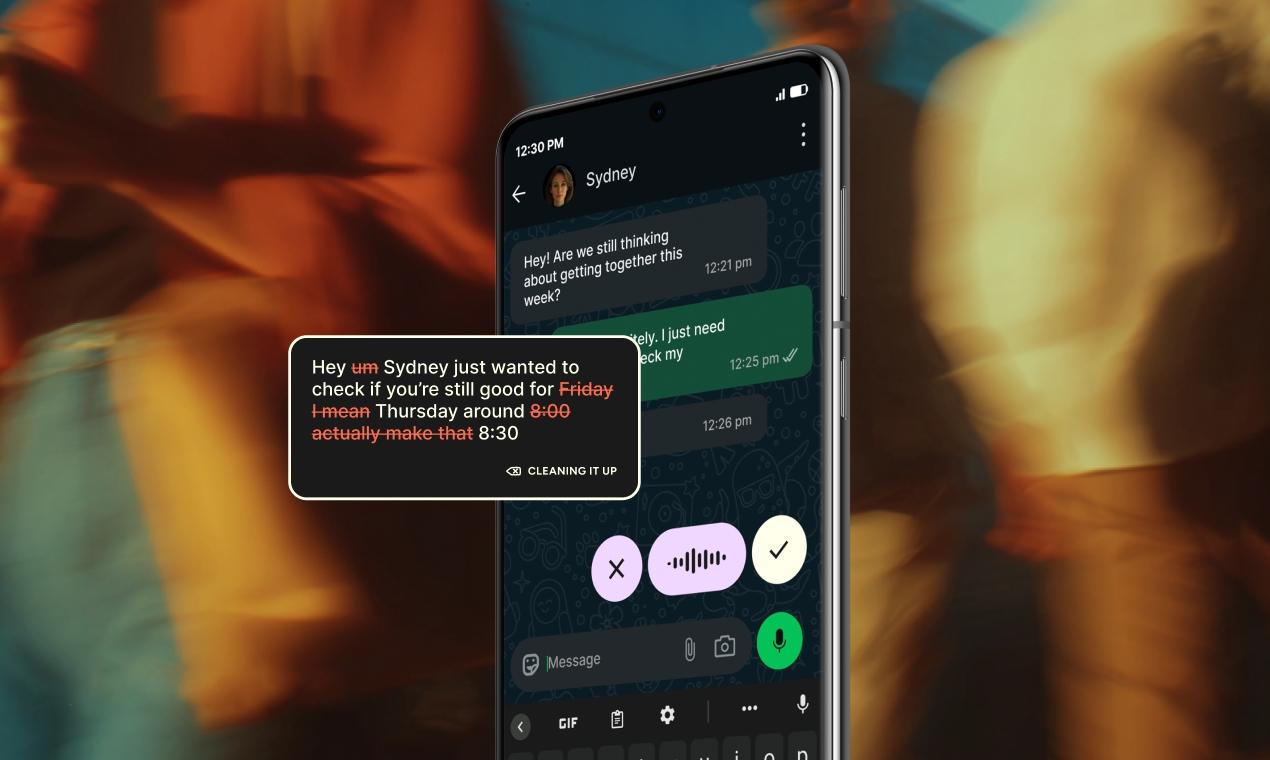
I was dictating a text message, changed my mind about timing for a dinner reservation midway through, and even listed out new possible options, and when I clicked “enter” I was shocked to see that WisprFlow had caught all the verbal messups and cleaned up my message to be clear and correct.
Whispering text messages led to whispering emails, which led to stream of consciousness ideas about a deal or a post I wanted to write. Suddenly I was using WisprFlow all day long.
When early product obsession runs so deep, we at Forerunner act – we chased Tanay and Sahaj down before they were raising, and made our case for what we believed Wispr Flow could be – not just a nice dictation app, but the definitive input layer between human ideas, communication, and technology. The voice of the user.
Details Matter
Wispr Flow isn’t just dictation. It just seamlessly takes thinking to action. Some experiences have room for “good enough” to get user adoption going, but the lack of voice utilization over the past decades shows that this is exactly why it never took off.
With Wispr Flow, users have an 85%+ zero-edit rate, which means that most of the time, what Wispr Flow captures is good enough to use. The previous comparison was just 10% zero-edit rate…meaning, 9 out of 10 times, you’d have to type edits to get your thoughts across.
That is what has made the difference between a clunky feature and a fundamentally new habit. A real behavior change.
People don’t just use Wispr, they reorganize how they work because they feel so empowered by the freedom to just speak their minds whenever and wherever. Whether it’s coding, emailing, writing — everything goes from thoughts to action with a whisper. Median users cross the 50/50 voice-to-keyboard threshold by month 4, and are at 72% voice / 28% keyboard by month 5. That saves hours every day, just by virtue of being able to communicate some 10+ orders of magnitude faster by voice than typing alone.
Forerunner’s Bet on Wispr Flow is a Bet on Humans
The next generation of category-defining companies won't win because they have the newest model. They'll win because they understood, better than anyone else, what a person actually needs edited in and out of their day, and Wispr does exactly that. When software becomes abundant, what's scarce — what's always been scarce — is understanding the human on the other end well enough that they trust you with something intimate: our thoughts and our voice.
Once people use Wispr, they feel like technology is finally working on their side. Ninety percent of growth has been word-of-mouth with near-zero paid spend, and 70%+ of users retain past 12 months.
We're investing because we've watched what happens when a product earns the kind of trust that makes people rebuild their habits. We know how rare and how valuable that actually is.
We could not be more energized for what's ahead.