AI got out of the chat box, and that happened faster than most people expected. It's in your inbox, your calendar, your code editor, your documents. It drafts, summarizes, suggests, and increasingly acts. By almost any measure of capability, the technology has arrived.
What hasn't arrived, not really, is AI that actually knows you. How you think, who you trust, what you're trying to get done this week and why it matters, the difference between an email that can wait and one that can't, and how each one should sound coming from you. The tools we have today are capable but largely interchangeable. They serve the task in front of them, but capability without context is still a stranger.
That gap, between capable and personal, is where the irreplaceable companies of this AI cycle will be built: a genuine, compounding understanding of a specific person that gets more valuable the longer it runs — and harder to walk away from the deeper it goes.
Town Meets You Where You Already Are
Connect your email and calendar, and it starts working. No new interface, no prompts, no setup. It lives in the tools you already use, understands how you work, and learns the shape of your day: who matters, what's urgent, where your time actually goes. From there, it starts suggesting routines you didn't know you needed. Build them together, and it runs them without being asked, surfacing what needs your attention and quietly handling what doesn't. Everything is visible and directable from one place, so you always know what's running and can shape it as your needs change.
I can count on one hand the products that have stopped me in my tracks. Town is one of them, not because of its vision, but because of what it did, immediately, inside the tools I already use.
It saw how I worked, learned my patterns, and started surfacing suggestions for routines I hadn't thought to ask for. Some I adopted as offered. Others, we (meaning, me and my Townie, Maxi) refined together until they fit precisely. A month in, I had more than twenty running across deal sourcing, portfolio management, network management, legal tracking, and general communications. The email drafting alone yields an 80% send rate with minimal edits. The morning that used to start with thirty minutes of inbox triage now starts differently.
I walk into my day prepped with meeting briefs and end it knowing exactly what needs to happen next. That shift is not incremental — it changes what the day is for.
The Portrait That Compounds
Every email drafted, every routine built, every brief generated adds to a portrait of you: how you think, how you communicate, what you value, where you spend your energy and where you don't. That portrait compounds. The Town that knows you after six months is meaningfully more useful than the one you started with, and the gap between it and anything a new tool could offer just keeps widening in a runaway race. This is what it means to be the front door to someone's digital productivity. Not just the place where work gets done, but the system that understands the person doing it. That accumulated understanding, precise and personal and always improving, is what actually compounds. No replacement has spent that time with you.
These Founders Know How to Earn Trust at Scale
Building that kind of relationship takes a specific instinct, one most technologists don't have and platforms structurally can't develop. It has to be earned at the system level, through reliability and trust, long before anyone depending on it ever notices it's there.
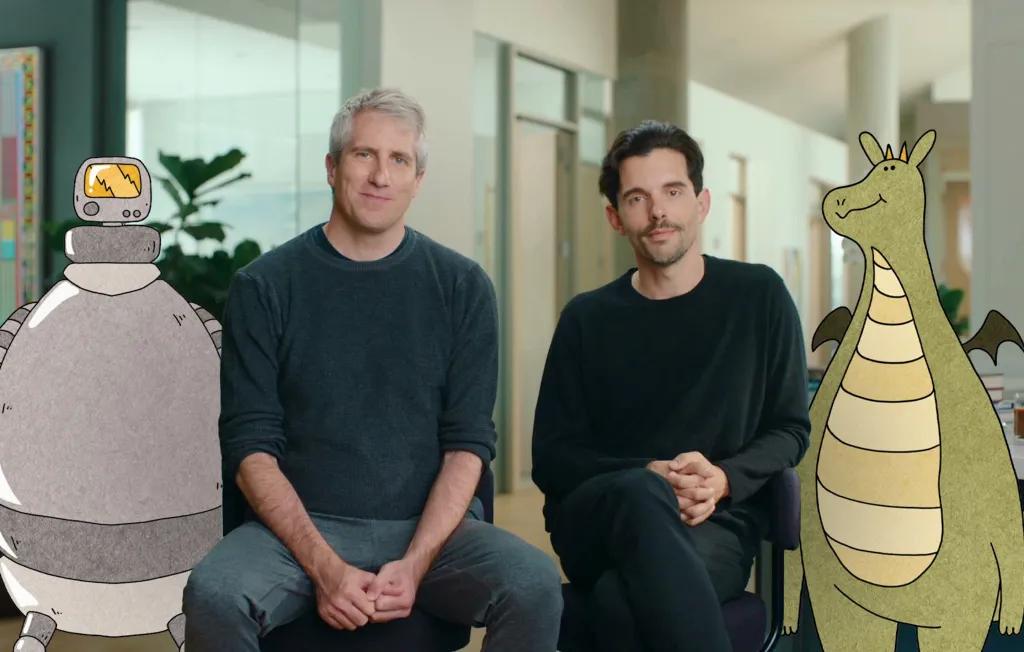
Jean-Denis Greze built the infrastructure layer as Plaid's CTO, creating the platform that millions rely on without ever knowing it. The instinct that made that work, earn trust at the system level, operate reliably every single day, become invisible infrastructure people would only notice if it disappeared, is exactly what Town requires. Tony Vincent has spent his career on the question most technologists skip: what does the relationship between a person and their tools actually feel like when it's right? Together they're building something that doesn't just perform tasks. It acts on your behalf, in your voice, with your judgment, in service of your priorities.
That's a different kind of product than the AI industry has mostly built so far. Most of what's been built optimizes for what the AI can do. Town optimizes for what you can do. Most AI makes you more efficient. Town makes you more yourself.
We Have Seen This Before
At Forerunner, we've spent fifteen years investing in companies that changed the relationship between people and an entire category. Chime, when banking ignored real people. Warby Parker, when buying glasses online seemed unthinkable. Faire, when indie retail felt existential in the face of big box giants. Oura, when wearables were abstract gadgets. Hims & Hers, when men's health was taboo. Dollar Shave Club, when subscriptions were a gimmick. What those companies share isn't a category or a business model. It's a founder disposition: start with the human problem, not the technology. Build something people genuinely need, not something they can be talked into trying. Earn the relationship, then deepen it.
That's the pattern, and when you've watched it long enough, you recognize it early. Not in the projections, but in the product itself. In whether you find yourself, after a few weeks, unable to imagine managing without it.
The best technology has always worked this way, not by making people smaller, but by making them more capable of being themselves. Town clears the way for the work only you can do.